
The problem
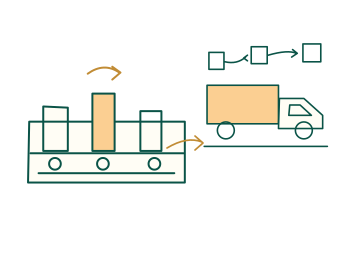
A factory could outsource 100,000 units annually at £16 each rather than an internal cost of £20. Outsourcing also adds £150,000 annual shipping cost, £100,000 annual quality-control cost and £250,000 upfront setup cost. The client requires payback within 18 months.
All case facts and figures in this exercise are illustrative.
Your task
Establish the cost assumption needed for this comparison, then calculate the net saving and payback. Recommend whether to accept the current proposal and what to negotiate if it falls short.
Worked solution
Establish what the £20 includes
Before using the unit-cost comparison, ask which internal costs stop if production moves outside.
Materials and some production spending may disappear. A factory lease, salaried team or shared overhead may remain. Allocating those costs to each unit does not make them avoidable when that unit is outsourced.
Compare the costs that change between options before celebrating the cheaper quote. Costs that remain after outsourcing still need to be paid.
For the base calculation here, assume the £20 is cash cost avoided per outsourced unit. The £16 supplier price covers the same acceptable product, and the additional shipping and quality-control costs are separate.
Show how £400,000 becomes £150,000
Using the opening figures and the avoidable-cost assumption, the table below calculates the annual cash bridge. It adds no new cost inputs.
| Annual cash effect | Amount |
|---|---|
| Avoided internal cost less supplier purchases: 100,000 × (£20 − £16) | £400,000 |
| Additional shipping | (£150,000) |
| Additional quality control | (£100,000) |
| Net recurring saving | £150,000 |
With the full saving beginning immediately and remaining stable, simple payback is:
£250,000 ÷ £150,000 × 12 = 20 months.
The recurring cash saving is positive and recovers setup spending after 20 months under these assumptions. It still misses the client's 18-month requirement.
A clear closing answer is:
“I would not approve the outsourcing plan on the current terms. Shipping and quality control reduce annual cash savings to £150,000, giving 20-month payback against the 18-month limit. I would negotiate either a £25,000 reduction in setup cost or enough recurring savings to close the gap, while confirming delivery and product quality.”
Try the calculation
Outsourcing avoids £500,000 in annual internal cash costs, adds £300,000 in supplier charges and £80,000 in annual logistics and quality costs, and needs £180,000 upfront. Full cash savings begin immediately and accrue evenly. Ignore other cash flows.
What is simple payback in months?
Turn the failed hurdle into a negotiation target
At £150,000 of annual savings, 18 months generates £225,000. Setup spending therefore needs to fall from £250,000 to no more than £225,000.
Alternatively, keeping the £250,000 setup cost requires annual net savings of:
£250,000 ÷ 1.5 years = £166,666.67.
The recurring improvement required is about £16,667 a year. Across 100,000 units, that is about 16.7 pence per unit.
If all other costs stay unchanged, a supplier price of approximately £15.83 would meet the hurdle. A quote of £15.85 would not quite do it: savings would be £165,000 and payback about 18.18 months.
That is a productive negotiation brief. “Get a better price” leaves the team without a target, while a precise threshold lets them assess a real offer.
Revisit the recommendation if fixed costs remain
Now test a different answer to your opening cost question: the interviewer says the £20 includes £2 per unit of allocated factory cost that remains after outsourcing. This replaces the base assumption that all £20 is avoidable; the avoided cost is only £18.
The revised annual saving becomes:
100,000 × (£18 − £16) − £150,000 − £100,000 = negative £50,000.
The proposal now raises recurring cash costs before the setup investment. A £25,000 setup concession cannot fix that operating loss.
Your recommendation should change from “close the payback gap” to “rebuild the sourcing case.” The initial 16.7-pence target no longer applies because the cost base was wrong.
This is why the cash definition belongs near the start of your reasoning. A beautifully calculated payback cannot rescue an irrelevant cost comparison.
Check your reasoning
A factory’s reported internal cost is £20 per unit, including £3 of overhead that will remain after outsourcing. The supplier charges £16 per unit for 100,000 units a year. Additional annual delivery and quality costs are £150,000. There is also an upfront setup cost.
What does the recurring cash comparison establish?
Treat spare factory capacity as a separate opportunity
The interviewer may suggest using the freed production capacity for another product. That can improve the decision if there is real demand, the capacity is suitable and the new work generates incremental contribution after its own costs.
Suppose that opportunity contributes £80,000 annually and needs no extra setup beyond what the case already includes. In the revised avoidable-cost scenario, the total annual improvement becomes £30,000: £80,000 less the £50,000 outsourcing penalty. Payback on £250,000 is then about 8.3 years, still far outside 18 months.
Name the opportunity, calculate it, and compare the combined result. “Capacity can be redeployed” is not a financial benefit until the case explains what it earns.
Put delivery and transition into the decision
The supplier must provide the required quality and delivery performance at the quoted volume. Check whether the shipping estimate includes the actual frequency, handling and inventory needed. A long lead time may require more working capital, and a transition may involve overlapping internal and external costs.
These details matter when they change the forecast or prevent the supplier from meeting the client's requirements. Give the procurement and operations owners the relevant checks before signing the commitment.
Practise a closing answer with the base case, then introduce the £2 unavoidable cost. Explain why the negotiation target changes. Manufacturing Downtime in the final-synthesis library offers another operational decision where the final answer must reflect the complete economics.
Final recommendation drill
Would your recommendation convince an MBB interviewer?
Manufacturing Downtime
Practise Manufacturing Downtime aloud and review feedback on your reasoning.